
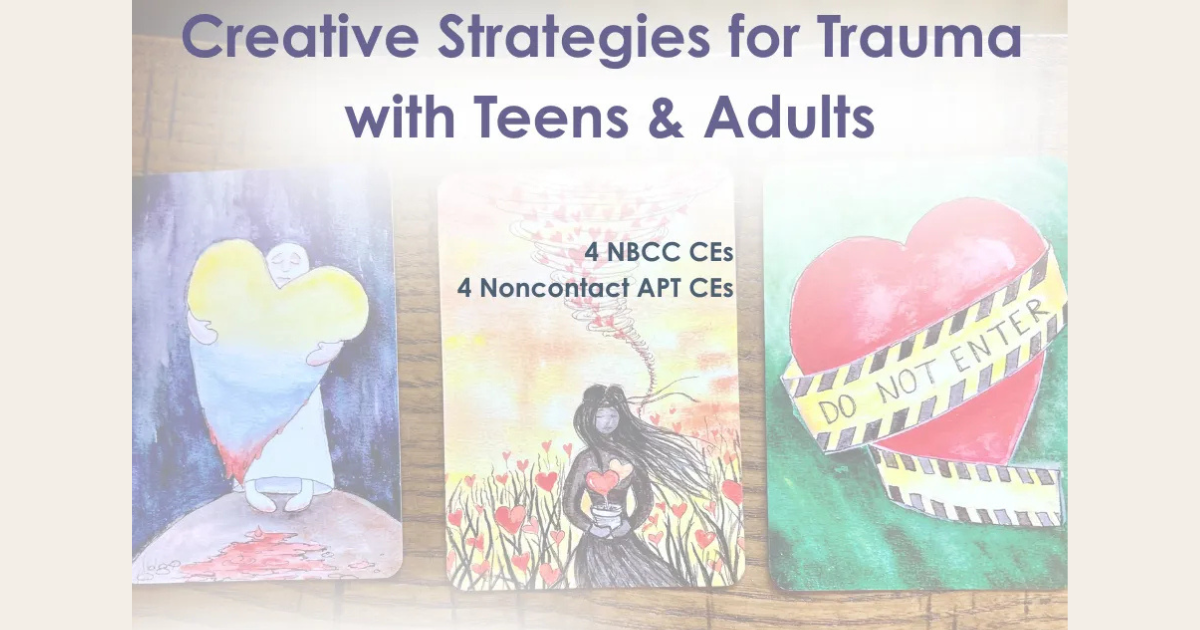
Beyond Talk: Creative Strategies for Trauma with Teens & Adults
Gabrielle Anderson, LMFT, RPT-S™
About this training
Watch a Real Class At Your Own Pace Treating trauma in teens and adults can feel overwhelming and can bring up a host of questions. 🤓 When should you ask questions? 🤓 How do you support clients without re-traumatizing them? 🤓 How can you keep the session calm while allowing difficult material to surface? 🤓 Many therapists experience imposter syndrome in trauma work and worry that they do not “know enough” to truly help. What many do not realize is that the foundations of play therapy include right-brain, low-brain, experiential, and sensory regulation activities. These approaches can be adapted beautifully for teens and adults, including those with developmental differences as well as highly intelligent, high-functioning clients. How This Training Can Help You This training shows you how to borrow the principles of play therapy without “doing play therapy” with adults, so you can feel confident applying creative, regulation-based strategies in trauma sessions. You will learn how regulation and brain integration form the foundation of every trauma-informed play therapy session. We will review Polyvagal Theory and how it can help clients remain calm during challenging moments, then practice creative right-brain/low-brain activities that create a sense of safety while exploring heavier therapeutic content. You will be able to demonstrate practical, creative play therapy prompts for teens and adults, including: ☀️ Step-by-step sensory drawing to help clients tell their story and calm the limbic system ☀️ Using therapeutic cards to facilitate discussion of difficult topics ☀️ Mingling sand tray miniatures with other right-brain/low-brain prompts ☀️ Abstract drawing of emotions ☀️ A right-brain/left-brain quiz and art prompt, perfect for teen groups ☀️ We will even explore complementary supplements and herbs for adults to research on their own Learning Objectives Upon completion of this course, participants will be able to: 🍎 Explain strategies for helping a client remain calm during a play therapy trauma session with a teen or adult 🍎 Identify tips for when and how to introduce a creative play therapy prompt during a talking session with a teen or adult client 🍎 Recognize signs of triggering in a teen/adult trauma session and describe interventions to restore regulation 🍎 Explain how to ask about trauma and ACEs in a teen/adult intake session 🍎 Describe differences between the higher brain and lower brain, left brain and right brain, and how those differences inform timing of play therapy strategies 🍎 Demonstrate three trauma-based play therapy strategies and tools from a neuro-bio and Ecosystemic Play Therapy perspective
CE credits: 4 · Non-Contact APT, NBCC